A fireside chat on leadership and organizational health
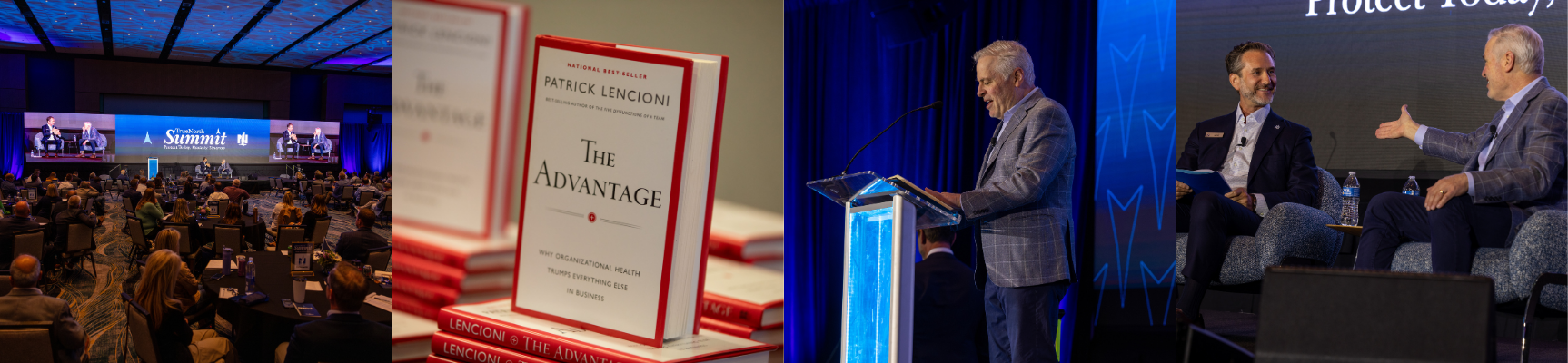
As part of the inaugural TrueNorth Summit, CEO Jason Smith sat down for a fireside chat with Patrick Lencioni, best-selling author and founder of The Table Group. TrueNorth has embraced The Table Group's approach to organizational health as part of its own growth journey, and the conversation offered those in attendance a behind-the-scenes look at why organizational health is a strategic advantage. Below is an edited Q&A recap of their exchange.
What leaders can gain from this conversation:
- Change starts at the top. TrueNorth began this work within its executive team before rolling out the program further.
- Expect inconsistency to surface before it resolves. A "homebrew" mix of leadership philosophies can cost the organization both speed and alignment.
- Give it time. TrueNorth's clarity and speed shifted meaningfully, but it took work and intention with the Table Group to get here.
- Accountability is an act of care, not conflict. Holding people to a standard is one of the clearest ways to demonstrate that you're invested in their success.
Getting started is the hardest part
Jason Smith: It's one thing to stand up and talk about this. It's another thing to really live the practical application of it. It's intimidating. Many of us are running companies, we're busy. How do people even get started?
Patrick Lencioni: Yeah, and there are so many stories, and everyone's lived them. That's the thing — when I write these books, people come up to me afterward and ask if I wrote it about their company, because the stories are fiction. But I try to write realistic fiction. I want readers to relate to the characters and see how they figure things out together. We've all lived it.
The hidden cost of "not enough"
Lencioni: A lot of really successful people are operating out of old wounds, thinking those wounds are superpowers. One of the most common is what we call the “not enough” syndrome — when someone learns early in life that achieving is how they get noticed and approved of. The world rewards that. You get good grades, you get a good job, you're successful and you still wonder why you're not happy. That mindset is never enough.
The best athletes, entertainers, politicians and leaders often operate from that same place: always chasing the next thing, afraid to let go of the motivation because they think that's what makes them successful. In reality, the shift that matters is moving from fear of failure to joy in doing something important.
Smith: It's beautiful. I love that.
Why staying independent was worth protecting
Smith: People early on told Patrick he should keep The Table Group all for himself and eventually take it public. He didn't hesitate on his answer, and it stuck with me. Going public just wasn't for him.
Lencioni: One of our strategic anchors is staying perpetually independent. Going public can make sense for industries that need the capital but choosing that path often means trading away a lot of the joy that comes with running your own company on your own terms.
Smith: That's one of the reasons this partnership feels right for us. We're privately held, too.
The turning point: Scaling without losing what matters
Lencioni: So, my question becomes: at what point in your journey did you realize you needed to figure out how to scale this? That's really what spawned introducing The Table Group approach to TrueNorth, correct?
Smith: Our leadership principles were kind of a homebrew soup: a little bit of this book, a little bit of that book. It was flavor of the month, and all good, but it was starting to show up as inconsistency. We'd walk out of a meeting and three people would head one way, three people would head another, all convicted they were on the same page. That wasn’t intentional and nobody was a bad actor; it's just what happens without a shared foundation.
At the same time, I knew we wanted to stay independent, to keep expanding our impact and create great jobs and opportunities for our people. I saw an opportunity to strengthen and accelerate that work, and learned we needed to start with our own executive team.
We explored a handful of options and ultimately landed on The Table Group. The first thing we heard was that it starts with you, and it starts with your executive team. That was February 2022, about four years ago now. Since then, our clarity as an organization is at a completely different level, and so is the speed at which we're able to move.
Is this work "soft"? Not if it saves you time.
Lencioni: People ask if this work is soft. It's like, if getting more done in less time is soft, then OK.
Smith: No. All those points about smart and healthy, and the multiplier effect you mentioned — that's the reality. Everyone at TrueNorth has heard this a hundred times if they've heard it once: we're a great company with plenty to work on. I'm a natural wonder-discerner. The list of things we could be doing better is always long. But in the four years we've worked with The Table Group, the clarity, the ability to work through real disagreement and get to commitment, and the ability to distribute the workload faster has been a game changer.
Lencioni: And as technology takes on more of the routine work, the human element becomes an even bigger differentiator.
Smith: We call it the bionic company: finding the best ways to connect people and technology.
Accountability is an act of love, not conflict
Smith: Commitment is important because it enables us to actually do the work. And let's be honest, this next part is the hardest one. People have to hold each other accountable for what they've committed to.
Lencioni: And accountability isn't a four-letter word. It's rooted in a different one: love. If you love the people you work with, you'll tell them when they're falling short. So many leaders say they care, then admit they've gone soft on holding people to a standard. I meet CEOs all the time who know someone isn't performing but haven't said a word to them directly.
Smith: For me, the test is simple: would I say this to my own daughters? If I love them and want the best for them, I have to be willing to tell them the truth. The same standard applies to the people we lead.
About the conversation
This Q&A was drawn from a fireside chat held during our inaugural TrueNorth Summit in Cedar Rapids, Iowa. Patrick Lencioni is the author of The Five Dysfunctions of a Team and founder of The Table Group, a firm dedicated to helping organizations improve teamwork, clarity and organizational health. TrueNorth has partnered with The Table Group since 2022 as part of its own organizational health journey.